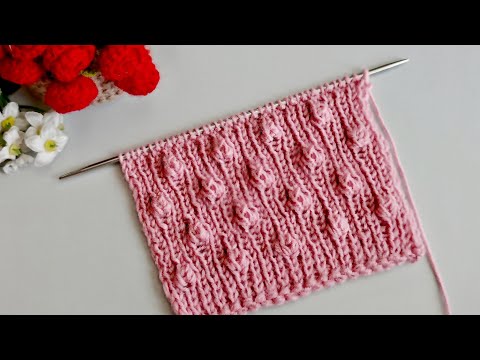
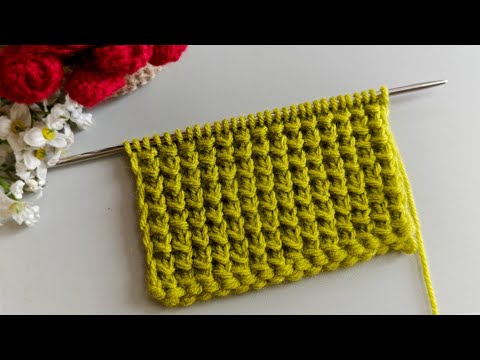
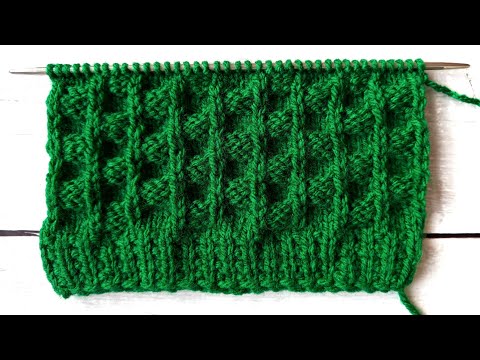
Fisherman Rib Leaf Knitting Pattern: The Trending Reversible Leaf Design
Big leaves drawn in soft fisherman rib, framed by purl lines, and it looks good on both sides. It looks difficult, but after the first few rows your hands just follow the leaves.
This design is very much in trend. It looks difficult, but once you've knitted the first two or three rows, you'll carry on by yourself. The leaves are drawn in fisherman rib, which is soft, plump and stretchy, and both sides look good. That makes it perfect for anything where both sides show: stoles, shawls, mufflers and neck warmers. Palazzo pants in this stitch look lovely too, for children or grown-ups.
Understanding the stitch count
One leaf is 13 stitches wide. It has a 3-stitch purl gap on each side, and the repeat also includes the stem of the next leaf: 13 + 3 + 3 + 1 = 20 stitches. For symmetry you need one extra knit stitch at the end, plus 2 edge stitches on each side. So cast on a multiple of 20, plus 5. My swatch is 65 stitches; I teach it on 45 (two repeats). If you're adding button bands or borders, add those stitches separately.
The one special stitch: knit below
On every right-side row, every knit stitch is knitted into the stitch below (knit into the loop underneath the stitch on the needle, and let both drop together). No knit stitch is ever knitted normally on the right side. On the wrong side, everything is worked normally, as it appears.
The border
- RS:
Slip 1. *Purl 1, knit 1 below.* Repeat across.
- WS:
Slip 1. Knit the knits and purl the purls normally (not below).
- Repeat
Work 4–6 rows like this. The border is fisherman rib, so it matches the leaves.
Row 1 sets up the leaves
- Row 1 (RS):right side
Slip 1, purl 1. *(Knit 1 below, purl 1) 3 times, knit 1 below, purl 3, knit 1 below (the stem), purl 3, (knit 1 below, purl 1) 3 times.* Repeat. End with knit 1 below, purl 1, knit 1.
- Row 2 (WS):wrong side
Slip 1. Work every stitch as it appears.
How the leaves grow and close
The whole pattern is 28 rows. On each right-side row the old leaves close a little at the purl gaps while a new leaf grows out from each stem, and every wrong-side row is simply worked as it appears.
- Closing a leaf: Purl the edge stitch of the leaf together with the first purl of the gap (purl 2 together). Sometimes that's a knit and a purl, sometimes two purls; the rows below say which, so the rib stays in order.
- Growing a new leaf: Lift the strand between the stitches on each side of the stem and work it. Make 1 knitwise means knit the lifted strand normally; make 1 purlwise means purl it. They alternate from one right-side row to the next, so the new stitches continue the knit-one-purl-one rib.
In the rows below, "knit 1 below" is the fisherman rib stitch. Every right-side row starts with slip 1, purl 1 and ends with knit 1 below, purl 1, knit 1; only the part between the stars is repeated across (20 stitches each time).
Rows 3–14: the new leaf opens
- Row 3 (RS):right side
*(Knit 1 below, purl 1) 3 times, purl 2 together, purl 2, make 1 knitwise, knit 1 below, make 1 knitwise, purl 2, purl 2 together, (purl 1, knit 1 below) twice, purl 1.*
- Row 5 (RS):right side
*(Knit 1 below, purl 1) twice, knit 1 below, purl 2 together, purl 2, knit 1 below, make 1 purlwise, knit 1 below, make 1 purlwise, knit 1 below, purl 2, purl 2 together, (knit 1 below, purl 1) twice.*
- Row 7 (RS):right side
*(Knit 1 below, purl 1) twice, purl 2 together, purl 2, knit 1 below, purl 1, make 1 knitwise, knit 1 below, make 1 knitwise, purl 1, knit 1 below, purl 2, purl 2 together, purl 1, knit 1 below, purl 1.*
- Row 9 (RS):right side
*Knit 1 below, purl 1, knit 1 below, purl 2 together, purl 2, knit 1 below, purl 1, knit 1 below, make 1 purlwise, knit 1 below, make 1 purlwise, knit 1 below, purl 1, knit 1 below, purl 2, purl 2 together, knit 1 below, purl 1.*
- Row 11 (RS):right side
*Knit 1 below, purl 1, purl 2 together, purl 2, (knit 1 below, purl 1) twice, make 1 knitwise, knit 1 below, make 1 knitwise, (purl 1, knit 1 below) twice, purl 2, purl 2 together, purl 1.*
- Row 13 (RS):right side
*Knit 1 below, purl 2 together, purl 2, (knit 1 below, purl 1) twice, knit 1 below, make 1 purlwise, knit 1 below, make 1 purlwise, (knit 1 below, purl 1) twice, knit 1 below, purl 2, purl 2 together.* The new half leaf is now 13 stitches.
- Every WS row
Slip 1, then knit the knits and purl the purls normally.
Row 15: a straight row
- Row 15 (RS):right side
No increases or decreases, just like row 1. *Knit 1 below, purl 3, (knit 1 below, purl 1) 6 times, knit 1 below, purl 3.*
Rows 17–28: the leaves swap places
Now the leaves you've just grown start to close, and new leaves open from the stems in between. The increases now sit at the edges of each repeat, so a new leaf's first increase ends one repeat and its second starts the next.
- Row 17 (RS):right side
*Knit 1 below, make 1 knitwise, purl 2, purl 2 together, (purl 1, knit 1 below) 5 times, purl 1, purl 2 together, purl 2, make 1 knitwise.*
- Row 19 (RS):right side
*Knit 1 below, make 1 purlwise, knit 1 below, purl 2, purl 2 together, (knit 1 below, purl 1) 4 times, knit 1 below, purl 2 together, purl 2, knit 1 below, make 1 purlwise.*
- Row 21 (RS):right side
*Knit 1 below, make 1 knitwise, purl 1, knit 1 below, purl 2, purl 2 together, (purl 1, knit 1 below) 3 times, purl 1, purl 2 together, purl 2, knit 1 below, purl 1, make 1 knitwise.*
- Row 23 (RS):right side
*Knit 1 below, make 1 purlwise, knit 1 below, purl 1, knit 1 below, purl 2, purl 2 together, (knit 1 below, purl 1) twice, knit 1 below, purl 2 together, purl 2, knit 1 below, purl 1, knit 1 below, make 1 purlwise.*
- Row 25 (RS):right side
*Knit 1 below, make 1 knitwise, (purl 1, knit 1 below) twice, purl 2, purl 2 together, purl 1, knit 1 below, purl 1, purl 2 together, purl 2, (knit 1 below, purl 1) twice, make 1 knitwise.*
- Row 27 (RS):right side
*Knit 1 below, make 1 purlwise, (knit 1 below, purl 1) twice, knit 1 below, purl 2, purl 2 together, knit 1 below, purl 2 together, purl 2, (knit 1 below, purl 1) twice, knit 1 below, make 1 purlwise.* The old leaf is closed down to its single centre stitch.
- Row 28 (WS):wrong side
Work the stitches as they appear. The stitches now sit exactly as they did in row 1, so start again from row 1, the straight row, and repeat these 28 rows.
Each repeat always comes back to 20 stitches, because every row has as many increases as decreases. If yours doesn't, count back to the last purl 2 together. Once you see the logic, the leaves are easy to follow: the knit stitches always grow out from the stem and close at the purl gaps.
- fisherman rib
- leaf knitting pattern
- knit below
- reversible knitting
- stole pattern
- muffler pattern
- palazzo knitting
- hand knitting